
Replace traditional paper forms with digital workflows.

View your data in real-time, exactly how your teams want it.
Flexible factory applications, built around your operations.
FoodOps works seamlessly as part of your business.

Streamline non-conformance handling with custom workflows.

Automate your schedules and enjoy a live view of your operations.

Centralise your documentation and make it available effortlessly.
Unify teams from lairage to coldstore with connected digital workflows

Strengthen traceability, grading accuracy, and factory productivity with connected systems

Maximise yield, welfare compliance, and throughput with smarter workflows

Enhance efficiency and visibility across the entire operation, from field to packhouse

Transform your dairy operation with digital workflows and connected data

Empower teams with real-time data and digital workflows built to your exact SOPs

Build compliance into your processes by default and monitor with ease.

Empower your teams to make data-driven decisions.
Manage PPE, asset logs and follow-up actions all in one tool.
Get real insight into your supplier performance, in real time.

Set up and manage your hygiene processes all from one tool.
Streamline HSE with digital workflows for near misses and accidents.
Is Connected Data the Key to Success in Food Manufacturing?

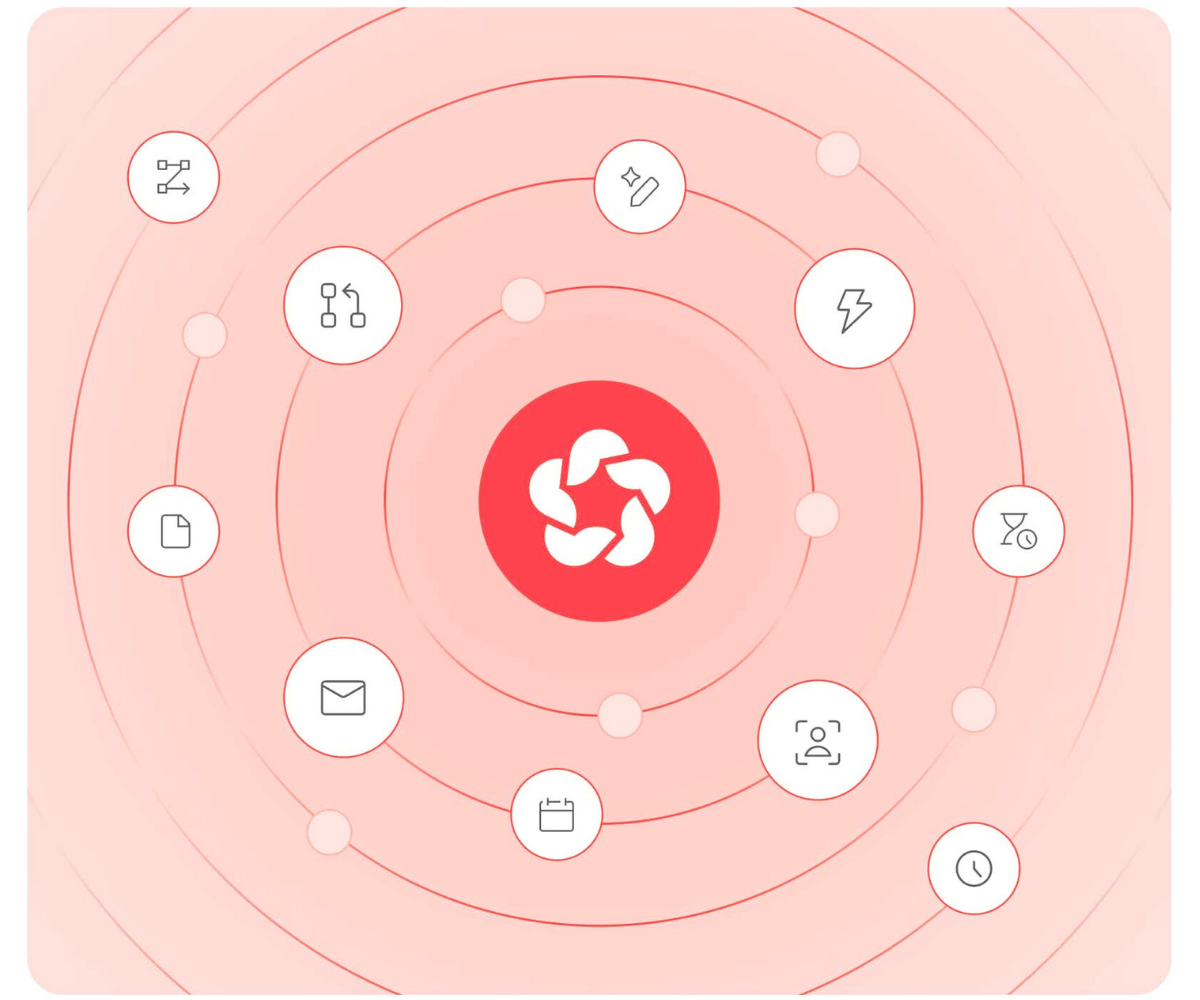
Data is at the heart of every decision in food and drink manufacturing. From production schedules to quality checks, supplier records to forecasts, information drives the choices that keep operations running smoothly.
Yet, too often, this data is scattered across multiple systems. Production software, paper records, spreadsheets and quality databases each tell part of the story—but without integration, you’ll never see the full picture.
The result? Teams chasing records, working from outdated reports, and spending hours reconciling information instead of analysing it.
Connected data changes that. When systems talk to each other, manufacturers gain a single, clear view of their entire operation. Decisions can be faster, smarter, and more confident. Operations become more efficient, agile, and sustainable.
So, is connected data the missing ingredient for success in food and drink manufacturing? Increasingly, the answer is yes.
8 ways connected data is transforming food factories
1. Faster decisions
When data flows seamlessly between systems, you get instant insights, not yesterday’s reports. Real-time data empowers teams to make quick, confident decisions that keep production running smoothly and customers happy.
2. Departments working together
Disconnected data often means disconnected teams. By integrating systems, everyone — from operations to quality and maintainance — works from the same version of the truth. The result? Better communication, fewer errors, and smoother day-to-day operations.
3. Scalability without stress
As your operation evolves, connected data ensures your systems can scale with you. Whether you’re launching new product lines or expanding to a new site, connected digital systems ensure you can keep to your compliance and operational requirements all whilst scaling.
4. Compliance and traceability
In food and drink manufacturing, traceability isn’t optional. Connected systems give you a clear digital audit trail across your production — making audits simpler, recalls faster, and compliance effortless.
5. Operational efficiencies
By linking equipment, production, and ERP data, inefficiencies become easy to spot. Connected data highlights bottlenecks, downtime, and waste, helping you optimise performance and reduce costs.
6. Sustainability
Sustainability goals are easier to achieve when you can see exactly where resources are used — and wasted. Connected data enables manufacturers to measure energy, water, and material consumption, and act quickly to improve efficiency and reduce environmental impact.
7. Resource optimisation
With a full view of the factory floor including people, machines, and materials, you can plan production more precisely. Connected data ensures that every asset is used effectively, maximising output and minimising waste.
8. Move from reactive to proactive
With these insights at your fingertips, you can anticipate challenges, plan strategically, and make impactful decisions—instead of constantly firefighting and chasing data.
A Connected Future for Food and Drink Manufacturing
Food and drink manufacturing is evolving and data is at the heart of that transformation. Connected data doesn’t just make operations more efficient; it enables smarter strategy, faster innovation, and greater resilience.
In a competitive industry where every decision counts, connected data might just be the key ingredient your operation needs to thrive.
FoodOps: The Connected Factory Platform
FoodOps is the connected factory platform built specifically for food manufacturers, helping operations replace paper-based processes with connected digital workflows.
With FoodOps, manufacturers can:
- Digitise workflows for quality, production, stock, document control and more with our no-code app studio
- Improve real-time visibility across factory operations
- Reduce paperwork and manual admin
- Maintain traceability from intake to despatch
- Standardise processes across lines, teams, and sites
- Respond faster to operational issues with connected real-time data
No replacing workflows. No unnecessary disruption. Just a connected system that improves operational efficiency, compliance and visibility from day one.
.png)
.png)
Start your digital transformation today
Join the many businesses driving efficiency and compliance with FoodOps. Arrange a demo today to experience the future of food manufacturing.
