
Replace traditional paper forms with digital workflows.
View your data in real-time, exactly how your teams want it.
Flexible factory applications, built around your operations.
FoodOps works seamlessly as part of your business.

Streamline non-conformance handling with custom workflows.

Automate your schedules and enjoy a live view of your operations.

Centralise your documentation and make it available effortlessly.
Unify teams from lairage to coldstore with connected digital workflows

Strengthen traceability, grading accuracy, and factory productivity with connected systems

Maximise yield, welfare compliance, and throughput with smarter workflows

Enhance efficiency and visibility across the entire operation, from field to packhouse

Transform your dairy operation with digital workflows and connected data

Empower teams with real-time data and digital workflows built to your exact SOPs

Build compliance into your processes by default and monitor with ease.

Empower your teams to make data-driven decisions.
Manage PPE, asset logs and follow-up actions all in one tool.
Get real insight into your supplier performance, in real time.

Set up and manage your hygiene processes all from one tool.
Streamline HSE with digital workflows for near misses and accidents.
Unified Factory Data Model for Real-Time Insight in Food Manufacturing

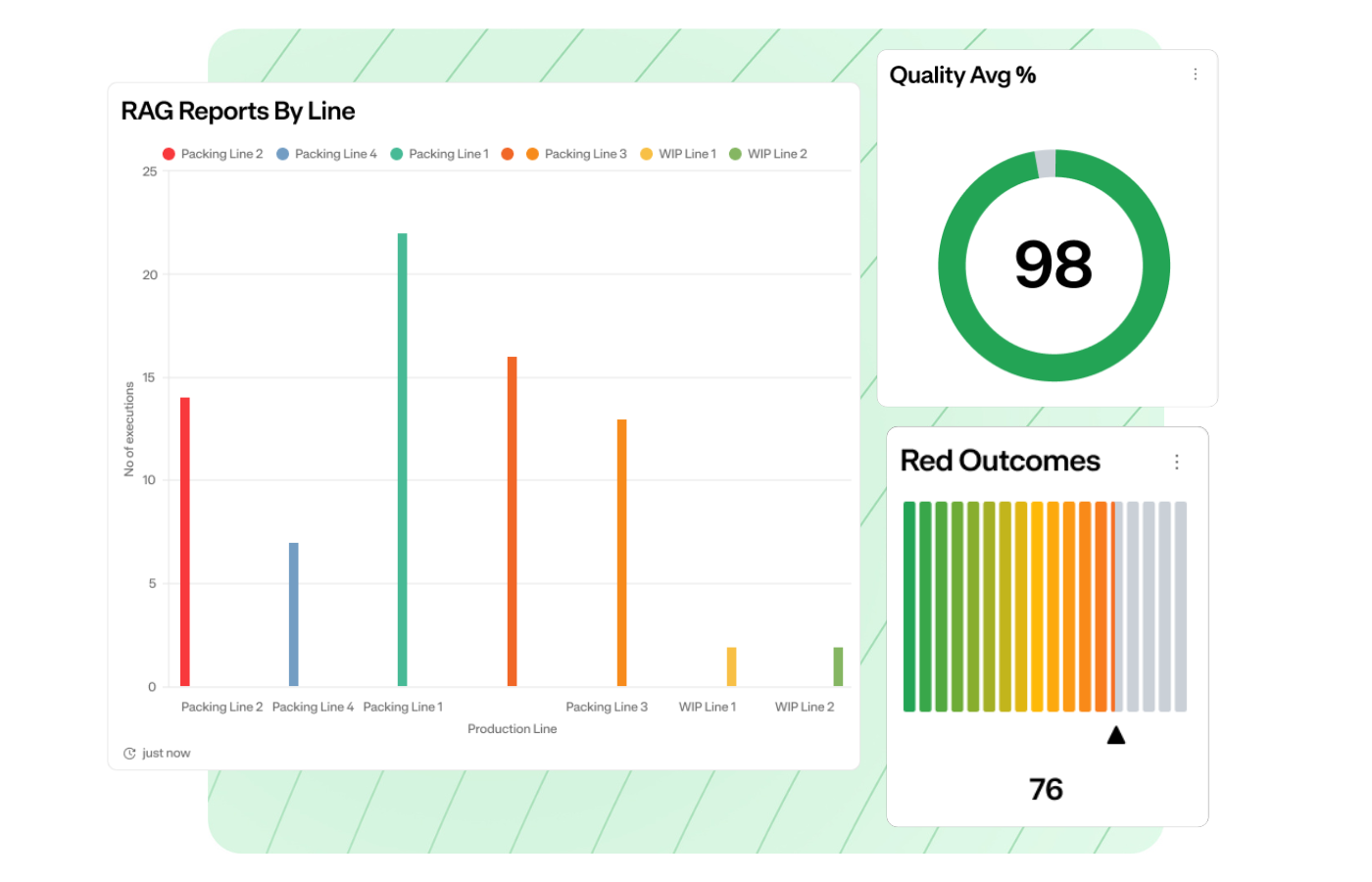
Food manufacturing generates a huge amount of data, but many teams we speak to find it challenging to turn that data into useful insights. Traditional systems often treat data as isolated and disconnected, which can make it harder to use effectively. As a result, decision-making can slow down, and teams may find themselves reacting to issues rather than managing operations more proactively.
At FoodOps, we’ve built something different: a Unified Factory Data Model that organises and connects your data in a way that reflects how your factory actually operates from raw intake through production, packing, and dispatch to compliance. This isn’t just data architecture, it’s the foundation for operational insight across your entire operation.
What Is the Unified Factory Data Model?
The Unified Factory Data Model brings together all operational data into a single, contextualised structure designed specifically for food manufacturing, including quality checks, batch steps, yields and equipment signals.
Instead of chasing spreadsheets or stitching together legacy systems, you get a logical, real-time view of your production environment.
Features of the Unified Factory Data Model
Because the model is built around actual workflows and factory processes, it powers capabilities that many legacy systems can't match:
- Composable Data Capture — Set up data capture around your actual workflows, ensuring the system works with your operations, not against them.
- Real-Time Traceability — Track every ingredient and product at every stage. Issues can be traced instantly instead of spending hours searching through fragmented data or paper records.
- Live Mass Balance — Monitor production yield and efficiency as it happens, identifying issues before it impacts margins.
- IoT & Device Connectivity — Connect scanners, scales, printers, and other equipment so machine signals become meaningful operational insights.
Where Traditional Systems Fall Short
Many legacy solutions treat data as a by-product, something stored for reporting later. They rarely capture context: how batches flow, how lines operate, or how equipment behaviour affects quality.
As a result:
- Data is fragmented across silos, slowing decisions
- Visibility into yield and quality is delayed or incomplete
- Teams spend more time compiling reports than taking action
By embedding context directly into the data, our model eliminates manual reconciliation, reliance on spreadsheets, and guesswork.
Why Data Matters in Food Manufacturing
Food factories operate in fast, complex environments where delays cost money, compliance is mandatory, and traceability is critical. A unified data model that mirrors your factory allows your data to be actionable, not just stored.
This enables:
- Faster issue detection and resolution
- Clearer operational visibility
- Real-time insights instead of lagging reports
- Better control over margins, waste, and compliance
In short, it turns operational data into a dynamic resource for better decisions.
This Isn’t Just Better Data. It’s Better Operations
For food manufacturers, a unified data model isn’t an IT upgrade, it’s an operational advantage. It connects quality, production, supply chain, and compliance into a single source of truth.
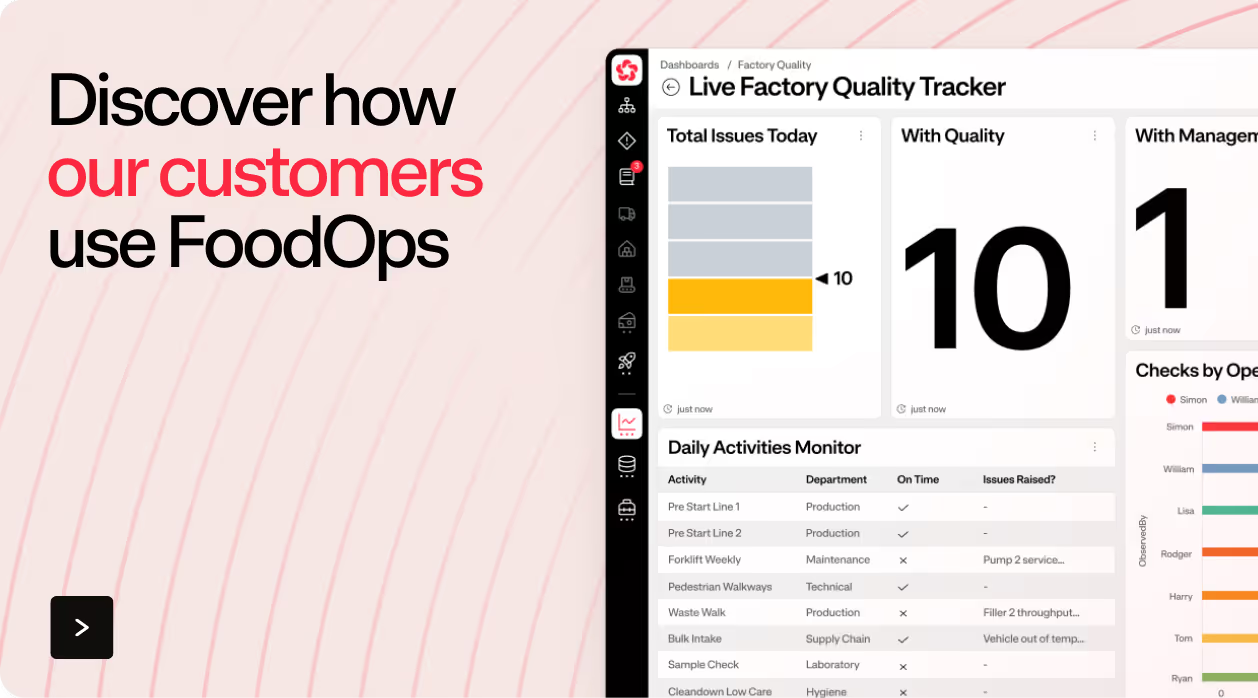
With dashboards and automated reports that reflect your factory floor in real time, teams can act immediately, reducing manual effort, strengthening compliance, and improving decision-making across the whole production.
Are you interested in seeing how your factory data can work for you?
About FoodOps
FoodOps is the connected factory platform built specifically for food manufacturers, helping operations replace paper-based processes with connected digital workflows.
With FoodOps, manufacturers can:
- Digitise workflows for quality, production, stock, document control and more with our no-code app studio
- Improve real-time visibility across factory operations
- Reduce paperwork and manual admin
- Maintain traceability from intake to despatch
- Standardise processes across lines, teams, and sites
- Respond faster to operational issues with connected real-time data
No replacing workflows. No unnecessary disruption. Just a connected system that improves operational efficiency, compliance and visibility from day one.
.png)
.png)
.png)
Start your digital transformation today
Join the many businesses driving efficiency and compliance with FoodOps. Arrange a demo today to experience the future of food manufacturing.
